
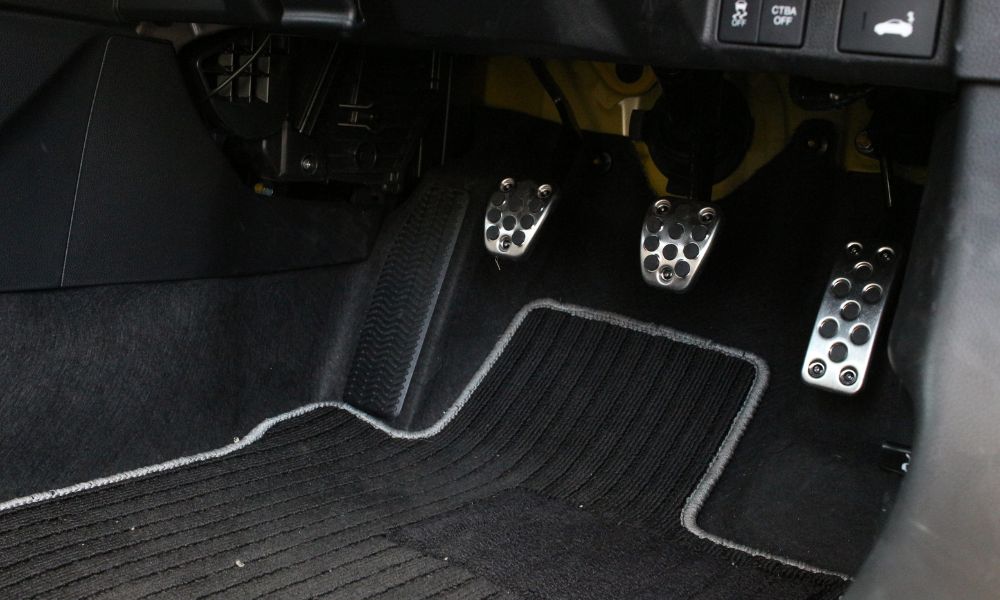
A clutch pedal that suddenly feels soft, sticks near the floor, or changes its engagement point can signal trouble in the hydraulic system. Clutch pedal problems often begin as a minor inconvenience but can eventually make selecting gears difficult or leave the vehicle unable to disengage the clutch properly.
Why Clutch Pedal Feel Can Change
Many modern manual transmissions use hydraulic pressure to transfer movement from the clutch pedal to the clutch release mechanism. Pressing the pedal moves fluid through a master cylinder, hydraulic line, and slave cylinder.
Low fluid, internal seal wear, or air entering the system can reduce that pressure. Drivers may notice the pedal feeling spongy, unusually light, or inconsistent from one trip to another.
Pay Attention to the Engagement Point
A clutch that begins engaging closer to the floor deserves attention. Changes can also appear gradually, so drivers sometimes adjust their shifting habits without realizing the pedal itself has changed.
Check the Hydraulic System First
Start with the clutch fluid reservoir where the vehicle design provides one. Low fluid can indicate leakage somewhere in the system rather than normal fluid consumption.
Routine inspections offered through fleet maintenance support can also reinforce why small fluid leaks deserve attention before they cause drivability problems. Look around the master cylinder, connecting lines, and slave cylinder for dampness or visible fluid.
Never crawl beneath a vehicle supported only by a jack. Use proper lifting equipment or have the inspection handled professionally.
Separate Hydraulic Trouble From Clutch Wear
Not every shifting problem comes from the pedal hydraulics. A worn clutch disc, damaged pressure plate, release bearing problem, or transmission issue can produce overlapping symptoms.
Broader vehicle service planning is useful because shifting complaints often require checking several connected systems rather than replacing the first suspicious part.
| Pedal Change | Possible Area | Useful Check |
|---|---|---|
| Soft pedal | Air or leakage | Fluid and hydraulic lines |
| Pedal stays down | Master/slave cylinder | Hydraulic pressure |
| Hard pedal | Release mechanism | Linkage and clutch parts |
| Changing bite point | Hydraulic or clutch wear | Full clutch inspection |
Watch What Happens During Gear Changes
Difficulty selecting first gear or reverse while stopped can be a clue that the clutch isn’t fully disengaging. Grinding despite fully depressing the pedal deserves faster investigation.
Tire and general vehicle inspections from resources such as automotive upkeep information can be part of a wider maintenance routine, but clutch diagnosis still requires attention to the hydraulic and mechanical components involved in disengagement.
Another useful test is comparison. If shifting becomes easier with the engine switched off, the clutch may not be releasing completely when the engine is running.
Mistakes That Can Make the Problem Worse
Repeatedly pumping the clutch pedal may temporarily improve pressure when air or seal problems exist, but it doesn’t repair the cause. Treating that temporary improvement as a solution can allow the failure to progress.
Drivers also sometimes force the shifter when gears resist engagement. That can place unnecessary stress on synchronizers and other transmission components. If normal pedal pressure no longer gives clean shifts, inspection is usually safer than applying more force.
Frequently Asked Questions
Why does my clutch pedal suddenly feel soft?
A soft pedal may result from air in the hydraulic circuit, low fluid, leakage, or a failing master or slave cylinder. The entire hydraulic path should be checked before assuming the clutch disc itself needs replacement.
Can low clutch fluid make shifting difficult?
Yes. Insufficient hydraulic fluid can prevent the release mechanism from moving far enough to disengage the clutch completely. Finding why the fluid level dropped is more important than repeatedly topping up the reservoir.
Why does my clutch pedal stay on the floor?
A pedal that remains down can be associated with hydraulic pressure loss, cylinder failure, a return mechanism problem, or another clutch fault. Avoid continued driving if clutch control has become unreliable.
Inspect the Cause Before Shifting Gets Harder
Changes in pedal pressure, travel, or engagement height are useful early warnings. Check the fluid level, hydraulic cylinders, lines, and visible leakage before assuming the transmission itself has failed. Addressing developing clutch pedal problems promptly can reduce the chance of being stranded and may help protect other drivetrain components.