

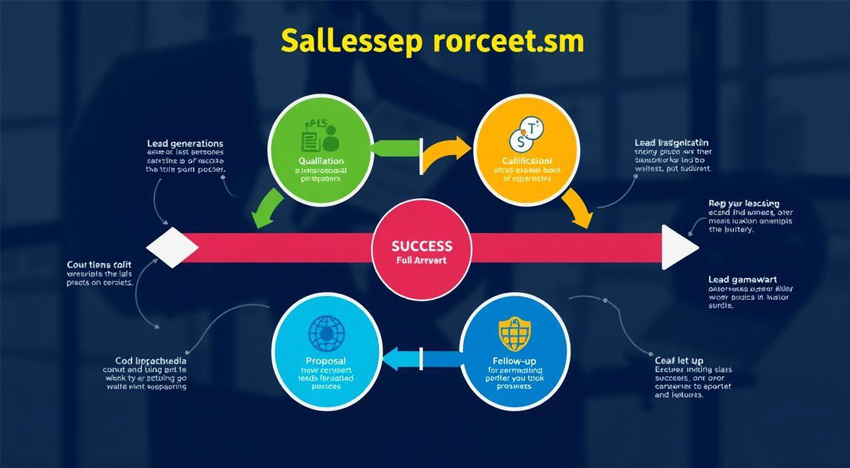
Long sales cycles often stretch because buyers understand the product but haven’t connected it to a problem worth solving now. More follow-up rarely fixes that gap. Sales teams can shorten unnecessary delays by clarifying value, business impact, decision criteria, and next steps earlier instead of trying to create momentum near the end.
Why Sales Cycles Become Longer Than Expected
A long sales process isn’t always a warning sign. Large purchases may involve several stakeholders, budget approvals, technical reviews, procurement checks, and internal comparison. Those steps naturally take time.
Trouble starts when the seller can’t explain why the opportunity remains open. Broad business discussions found through commercial growth resources can provide useful context, but the salesperson still needs account-specific evidence showing what is slowing the decision.
Separate Necessary Delay From Sales Friction
Necessary delay has a reason: a scheduled budget meeting, contract review, implementation assessment, or executive approval. Sales friction sounds different. Buyers say they are “thinking about it,” meetings repeatedly move, and no one owns the next action.
That distinction helps managers avoid treating every old opportunity as equally healthy.
Clarify the Cost of the Problem Early
Value becomes easier to understand when buyers can connect the offer to a measurable problem. Instead of spending early conversations listing features, ask what the current problem causes in wasted time, lost sales, missed deadlines, higher costs, or customer frustration.
Useful ideas from business expansion discussions may help frame broader growth questions, but the strongest value case comes from the buyer’s own situation. A prospect who describes the cost personally is usually easier to engage than one hearing generic promises from a salesperson.
| Sales Signal | What It Suggests | Better Response |
|---|---|---|
| Repeated delays | Priority may be weak | Revisit business impact |
| Many stakeholders | Decision process is complex | Map roles early |
| No next meeting | Momentum is uncertain | Agree on a dated action |
| Price concern | Value may be unclear | Connect cost to outcomes |
Understand How the Decision Will Actually Be Made
Salespeople sometimes spend weeks building support with one enthusiastic contact without learning who approves the purchase. That creates a painful surprise when a finance leader, department head, or procurement team enters late.
Ask early who will influence the decision, what information each person needs, and whether competing priorities could interrupt the process. Discussions about profit and margin thinking can offer broader commercial perspective, while account conversations should stay focused on the buyer’s actual approval path.
Build a Mutual Decision Path
A simple mutual plan can include evaluation dates, internal meetings, demonstrations, legal review, purchasing steps, and the expected decision date.
It doesn’t need to become a complicated project document. Its purpose is to replace vague expectations with visible commitments.
Stop Mistaking Activity for Progress
Sending another email is activity. Holding another demonstration is activity. Neither automatically means the opportunity moved forward.
Real progress happens when something changes on the buyer’s side. A new stakeholder joins. Requirements are confirmed. Funding receives approval. A technical concern is resolved. A decision meeting gets scheduled.
Tracking those changes makes pipeline reviews more useful because salespeople can explain what advanced rather than how busy they were.
Where Sales Teams Often Go Wrong
One mistake is trying to create urgency only after an opportunity has stalled. By then, the buyer may have mentally downgraded the project.
Another mistake is offering discounts simply to accelerate timing. Lowering the price can weaken the value story without solving the real obstacle. If the prospect still lacks internal agreement, budget ownership, or a strong business reason, a cheaper quote may sit unanswered too.
Frequently Asked Questions
How long should a normal B2B sales cycle take?
There is no universal timeline. Deal size, industry, buying committee, contract requirements, budget timing, and implementation complexity all matter. The useful question is whether each opportunity has identifiable progress and a realistic next step.
Can better discovery shorten a sales cycle?
Yes. Strong discovery can expose business impact, decision criteria, stakeholders, obstacles, and timing earlier. That reduces the chance of discovering major objections near the end of the process.
Should salespeople follow up more often on slow deals?
Only when the follow-up has a purpose. Repeated “checking in” messages rarely create progress. A better follow-up introduces useful information, resolves an open question, confirms a milestone, or helps the buyer complete the next decision step.
Make Value Clear Before Momentum Disappears
Long deals become easier to manage when value, stakeholders, timing, and decision steps are clarified early. Don’t measure opportunity health by how long the prospect has remained friendly. Look for concrete movement. Before your next follow-up, identify the unresolved decision that must happen and build the conversation around moving that decision forward.